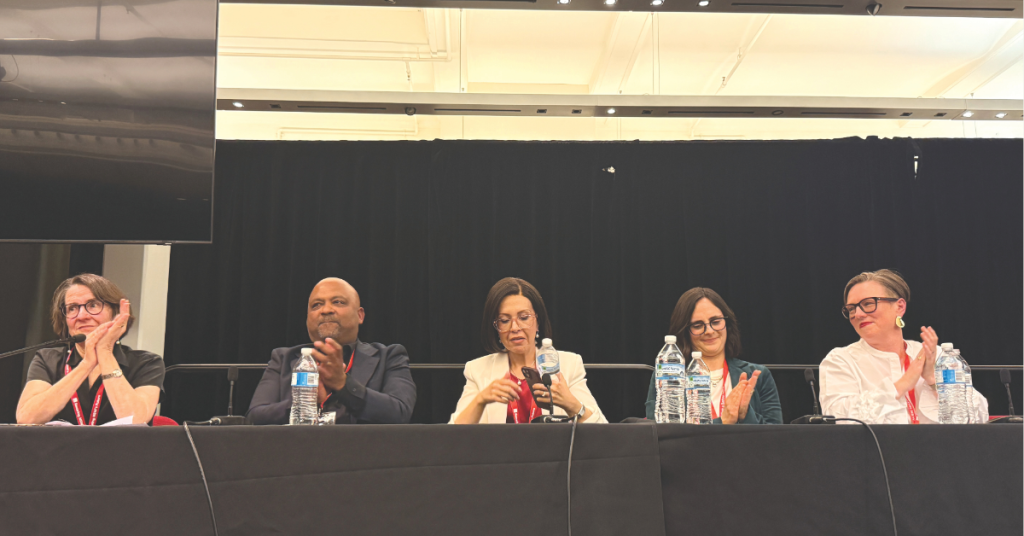
IEUA NSW/ACT Branch Secretary Carol Matthews joined NSW Education Minister Prue Car, other unions and academics at the NSW Labor Conference in Sydney on 4 July for a panel on teacher workload.
Chaired by IEU Deputy President Denise McHugh, the panel also featured NSW Teachers Federation President Henry Rajendra, Professor Nicole Mockler from the University of Sydney and Associate Professor Meghan Stacey from the University of NSW.
“It was a great opportunity to join with academics, the NSW Teachers Federation and the Education Minister for a lively discussion about this complex challenge,” Matthews said.
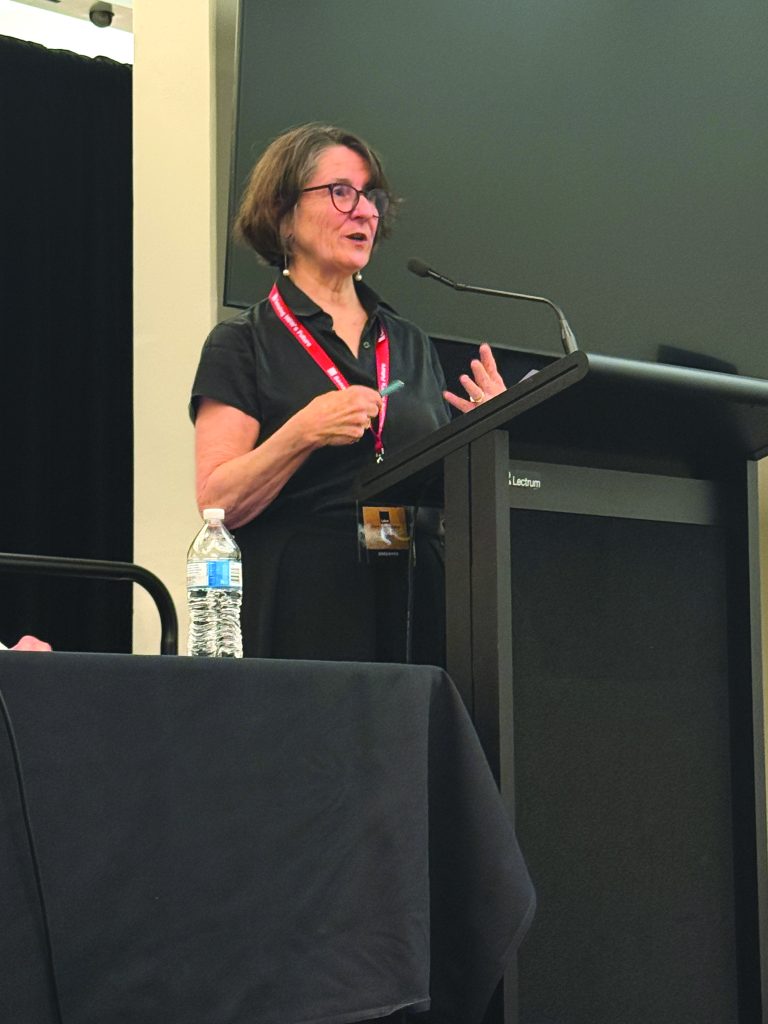
“We need to see face-to- face teaching time reduced. We need admin processes streamlined. Programming requirements need to be less onerous – trust teachers’ professional judgement. And we need more support for children with special needs and those experiencing behavioural issues.
“Our focus has been to ask government not to say what is required – reather, we are asking both state and federal government agencies to spell out what is not required.
“We have been instrumental in encouraging governments to spell this out in government–published fact sheets which our members can then quote in pushing back on employer demands.”
IEU NSW/ACT Branch Secretary Carol Matthews
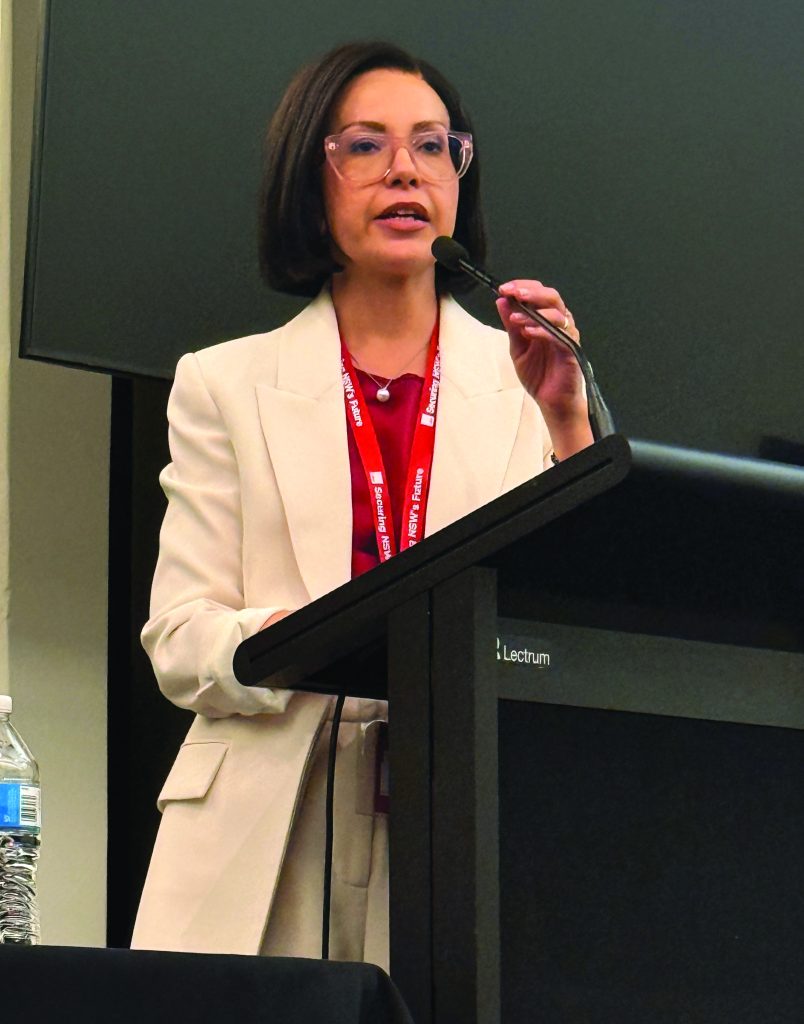
“We’ve probably spent the last three years trying to attack the low-hanging fruit, if you like, in terms of workload. It felt like it was an emergency.
“We asked what we could streamline straight away, particularly when it came to say the curriculum rollout, which we slowed down.
“We’re talking about decades and decades of workload intensity that has been put on top of our teaching profession, and I acknowledge that as a minister.
“But there is a long way to go – I know there’s a long way to go.
“We’re willing to sit down with unions, willing to look at the evidence, and willing to do things that will drive down workload. We’re open to all ideas.”
NSW Education Minister, Prue Car
What’s driving it?
“Teacher workload has become one of the most defining challenges the profession faces,” said McHugh, who moderated the panel.
“It is consistently identified by teachers as one of the biggest factors affecting wellbeing, retention and ultimately student learning.”
Matthews and McHugh listed workload intensification factors familiar to members: programming, syllabus and policy churn, administration tasks, documentation, compliance, increasing student complexity and behavioural issues, reporting obligations, excessive data collection, extracurricular tasks such as marketing evenings, and technological change.
The list goes on.
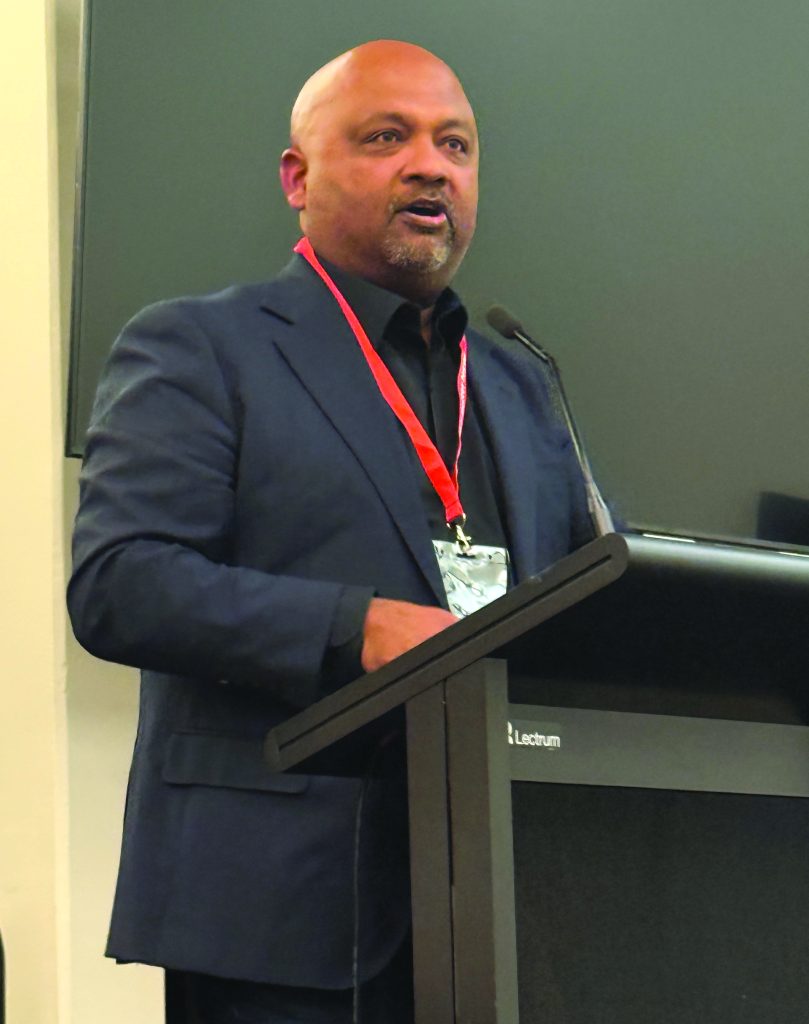
“The time we give teachers to prepare our kids today has simply not kept pace with the reality of the job.
“Our work is more complex and demanding in every possible way, yet the conditions to adapt remain static.
“Preparation time is unfinished business.
“Teachers feel overworked and stretched beyond capacity – they need more time and cognitive space to do the work that really matters for teaching and learning.
“Let’s seize the day. Let’s rebuild public education together, give teachers the preparation time they need, and our students deserve.”
NSW Teachers Federation President, Henry Rajendra
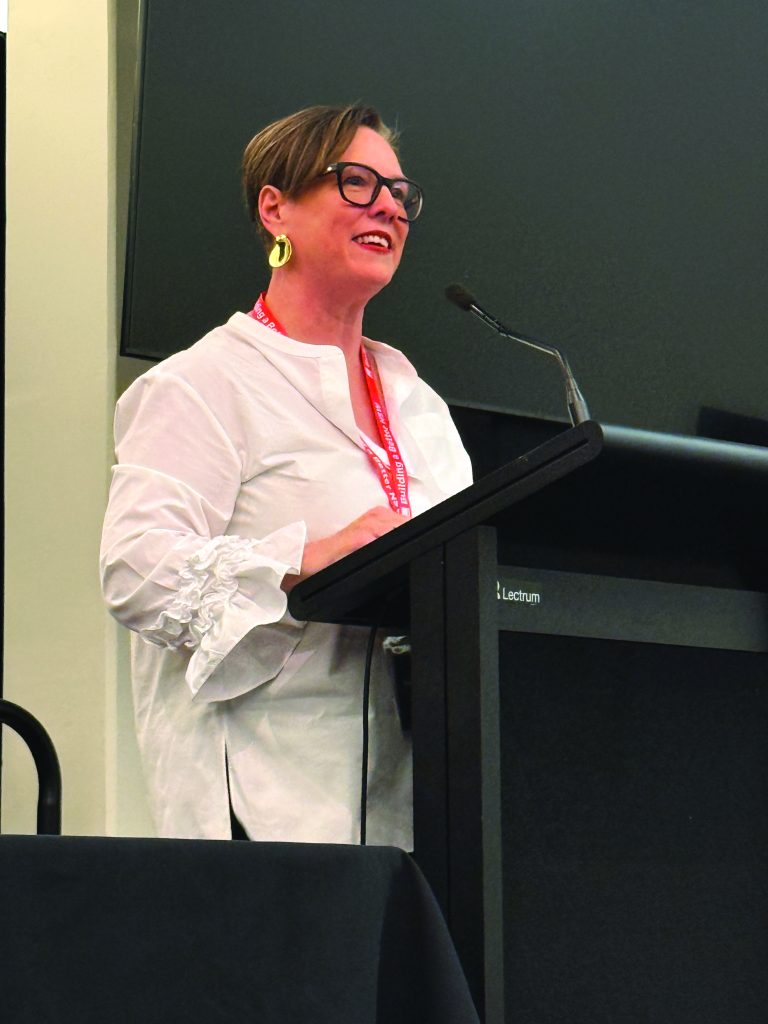
“While this presents on the surface as an issue of workload, or intensity, or time poverty, or burnout, the problem that lies at the heart is actually one of trust.
“We’ve built systems that assume teachers need to account for themselves at every turn, then we wonder why their days are so heavy.
“So the question I want to leave you with isn’t ‘How do we streamline the work?’ It’s whether we trust teachers enough to need less from them, and what intelligent, rather than performative, forms of accountability would look like in our schools.”
Professor Nicole Mockler, University of Sydney
What members say
IEU members consistently cite workload as a key reason for burnout. Here are just three responses to a recent IEU survey:
Teacher: “I’m being asked to do the impossible as though it’s totally reasonable. Rather than being valued as an experienced and effective professional, I’m constantly being told that I’m not doing enough and have to somehow prove that the school should continue to employ me.”
Subject coordinator: “Coordinators are suffering. [We have to] support staff to adapt and complete changes, with little time to effectively perform this support on top of other responsibilities. I was a successful key learning area coordinator for 20 years and stepped down this year. I will never be a coordinator again.”
Principal: “I try very hard not to overload my staff and am cognisant of their workloads and wellbeing. However, the job requires long hours at times and great skill to program and teach in ways that cater for every child’s needs and manage ever-increasing challenging behaviours. We’re all struggling more than ever due to higher expectations from every stakeholder. It’s untenable and leading to high attrition rates and psychosocial harm.”
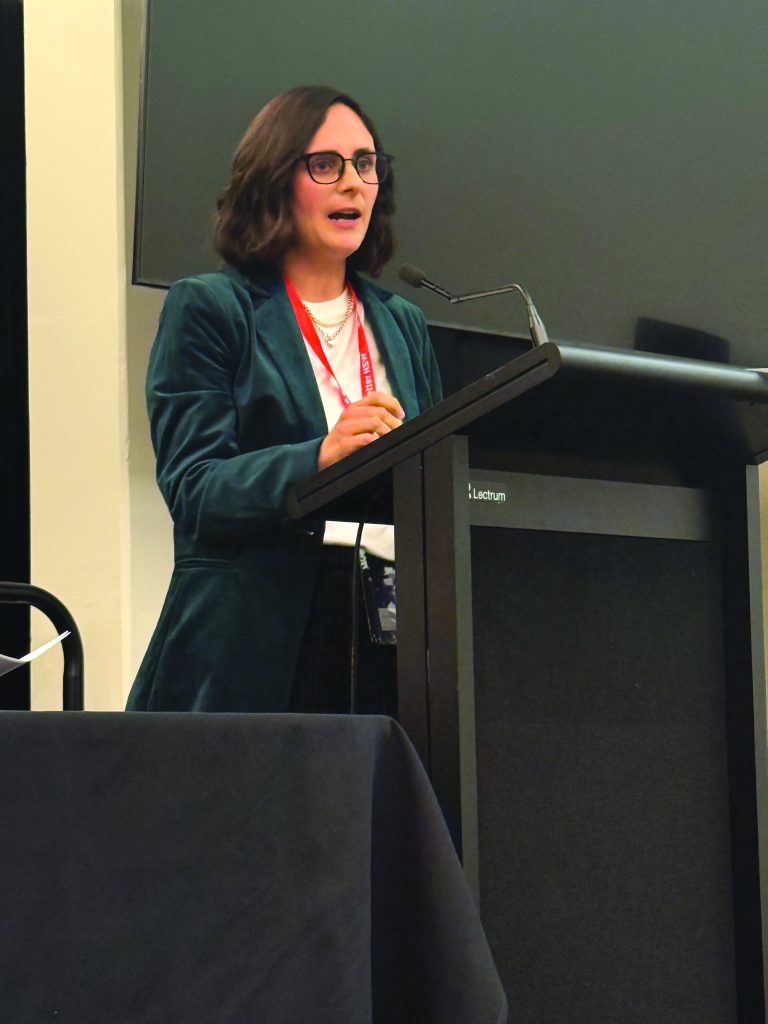
“We looked at the intersection of quantity and intensity.
“So, let’s start with a high school teacher we’ve called Jane, who said: ‘If a kid does something stupid, you need to address it straight away, so then it takes up your time, because you might do a lunchtime detention, or if it’s something more serious, you have to email home. Every single time you have a conversation with a student or a parent, it has to be logged, so it’s just a lot of little things you have to follow up on.
“Teachers are overwhelmed by the quantity of tasks, yes, but also by the way these tasks coalesce, making some hours in the day much heavier than others.”
Associate Professor Megan Stacey, University of NSW
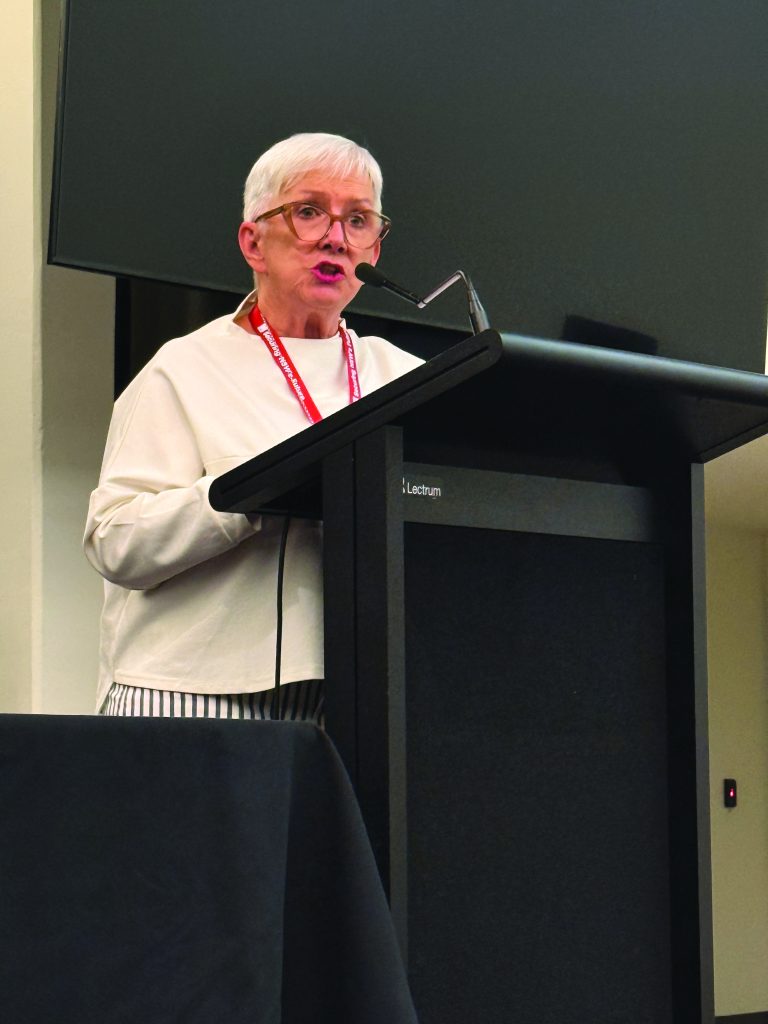
“Workload intensification is the combined effect of curriculum demands, compliance, accountability requirements, increasing student complexity, admin tasks, technological change, reporting obligations, and other additional responsibilities.
“Too often, worthwhile initiatives come with another form to complete, another meeting to attend, another piece of compliance to satisfy, or another expectation placed on teachers’ shoulders.
“If we want outstanding schools, we need to ensure teachers are able to spend more of their time doing what they entered the profession to do: teaching, inspiring and supporting young people.”
IEU Deputy President, Denise McHugh
Note: The IEU is not affiliated with the Australian Labor Party, or any political party. The union engages with politicians of all stripes to advocate for and advance the interests of our members.
Published in the July 2026 edition of Newsmonth.