Dance, drama, drawing and painting are a vital part of early childhood education, yet they’re not always given the attention they deserve, writes Andrew Taylor.
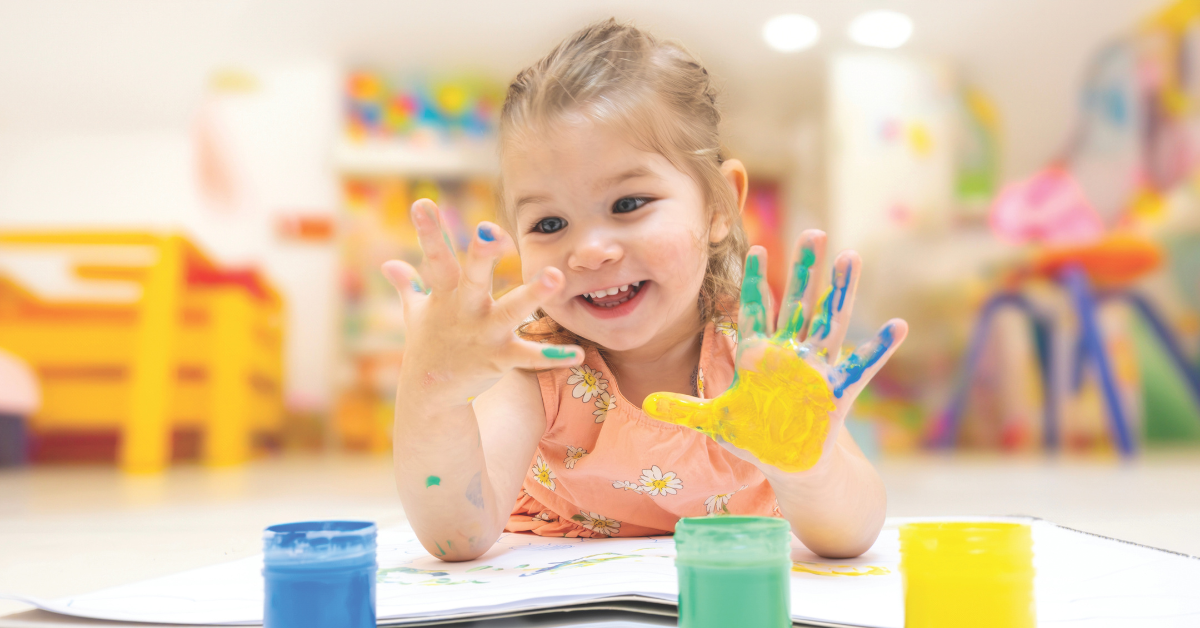
Dr Jennifer Stevens-Ballenger discovered a rich world of art while conducting research at an early learning centre in Melbourne.
An early childhood education lecturer at La Trobe University, Stevens-Ballenger observed teachers spending up to five hours a week carefully creating spaces and preparing art materials for the children to paint, draw and sing.
“In early childhood arts education, the environment matters enormously,” she says.
“If children only have access to a few blunt pencils in a plastic tub, that sends a very different message than a thoughtfully prepared space with beautiful paper, charcoal, clay, paint, loose parts, and room to work slowly and revisit ideas.”
Arts education vital
The arts are central to the Early Years Learning Framework, especially its focus on play, creativity, culture and encouraging children to be confident, capable learners.
Stevens-Ballenger says arts education supports both learning in and through the arts. Learning in the arts refers to the knowledge and skills children develop within artforms, for example, learning to draw, paint, sing, compose and move.
“Learning through the arts is about how the arts help children understand the world and connect with other areas of learning,” she says.
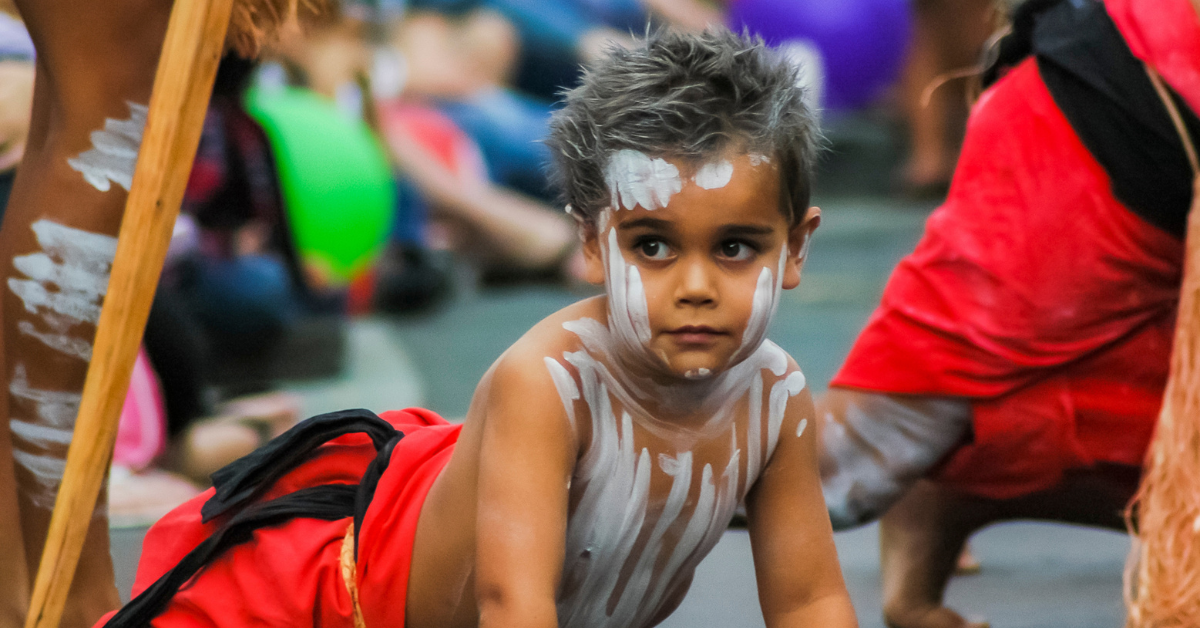
Stevens-Ballenger says children use different artforms to express ideas, make meaning, test theories and communicate experiences they may not be able to articulate in words.
“A drawing can show us what a child understands about family, community, nature, identity or even something as complex as fairness and justice,” she says.
Research also shows that the arts can support learning in language and literacy, numeracy, maths and science.
“Children might explore narrative structure through drama and storytelling, mathematical concepts through dance and movement, or scientific thinking through observation, drawing and design,” Stevens-Ballenger says.‘Highly intentional’
Stevens-Ballenger co-wrote the 2024 study Arts integration in an early childhood education setting: The role of the teacher, which examined how experienced early childhood teachers integrate the arts into their practice.
“The teacher’s role in arts education is not simply to provide paint and step back,” she says. “It is highly intentional and deeply pedagogical.”
Stevens-Ballenger says teachers fulfil different roles when teaching arts, including curating materials and creating environments that invite exploration as well as acting as a facilitator to help children express their ideas.
“Children often communicate important ideas through the arts long before they can explain them verbally,” she says. “Teachers need to pay attention to those expressions and take them seriously.”
Stevens-Ballenger also says teachers are responsible for protecting time for the arts – children quickly learn what adults value.
“If the arts are treated as filler or reward time, that message is clear,” she says. “If they are treated as central to learning, identity and expression, children understand that too.”
Unique approach to learning
Arts education in early childhood settings differs considerably from what is taught in primary schools.
In early childhood settings, the arts are usually much more integrated in the curriculum rather than treated as a distinct subject taught at a particular time of day.
“Storytelling becomes drama, scientific observation becomes drawing, mathematical thinking happens through movement and dance, and music supports routines, relationships and belonging,” Stevens-Ballenger says.
Early childhood arts teaching is usually led by generalist teachers rather than specialists.
“It is often more responsive, emerging from children’s interests, play, and inquiry rather than being tightly prescribed in advance,” she says.
Stevens-Ballenger says there is also a stronger emphasis on process over product in early childhood arts education.
“The arts are no less rigorous in early childhood education – it is just approached differently,” she says. “They are deeply connected to identity, relationships, belonging and meaning-making, which is exactly where early childhood pedagogy begins.”
Building confidence
Research shows many early childhood teachers lack confidence in teaching
the arts.
Stevens-Ballenger says there is also a misconception that teaching the arts requires teachers to be strong singers, trained musicians or highly skilled visual artists.
“What matters most is pedagogical skill: knowing how to choose materials, offering meaningful provocations, asking good questions, documenting learning and responding to children’s ideas,” she says. “That is the work of teaching.”
Yet teacher training programs often allocate limited time to arts subjects, compared to literacy, numeracy and compliance-heavy areas.
“When contact hours shrink, the arts can be treated as something extra rather than something central,” Stevens-Ballenger says.
“That creates a cycle: teachers feel underprepared, so they avoid teaching the arts, which then reinforces the idea that the arts belong to specialists rather than everyday classroom practice.”
Supporting teachers
More opportunities to make art are key to building teachers’ confidence to teach music, visual arts, drama and movement, Stevens-Ballenger says.
“In teacher education, that means less focus on performance outcomes and more focus on participatory arts-making, experimentation, play and process.”
When pre-service teachers pick up a ukulele, sing together or explore drawing as a way of thinking, Stevens-Ballenger says confidence shifts quite quickly.
“They begin to see that arts teaching is not about being a professional artist – it is about being willing to participate,” she says.
Stevens-Ballenger says teachers also need strong examples of quality arts practice in early childhood settings.
“Seeing how teachers use provocations, environments, materials, documentation, and responsive teaching helps make the work visible and achievable,” she says.
“Working alongside artists or colleagues with different strengths can be incredibly valuable – not because generalist teachers should hand the arts over, but because shared practice builds confidence and expands possibilities.”
Colleagues and leaders who value arts education are also vital. In busy early childhood settings, Stevens-Ballenger says the arts can be pushed aside by “routines, compliance and school-readiness pressures”.
“If the arts are positioned as central to children’s learning and rights, rather than optional extras, teachers are far more likely to invest in them,” she says.
Published in the June 2026 edition of Bedrock.